
Native advertising is a term applied to many different types of media. The umbrella definition for native advertising as laid out by the IAB is: a form of paid media where the ad experience follows the natural form and function of the user experience in which it is placed.
| Form Native ads match the visual design of the experience they live within, and look and feel like natural content. |
Function Native ads must behave consistently with the native user experience, and function just like natural content. |
The IAB established six core native ad formats:
- In-feed (e.g. Facebook and Twitter)
- Paid search (e.g. Google AdWords)
- Recommendation widgets (e.g. Outbrain and Taboola)
- Promoted Listings (e.g. Amazon and Etsy)
- In-Ad (e.g. Appssavvy)
- Custom Content
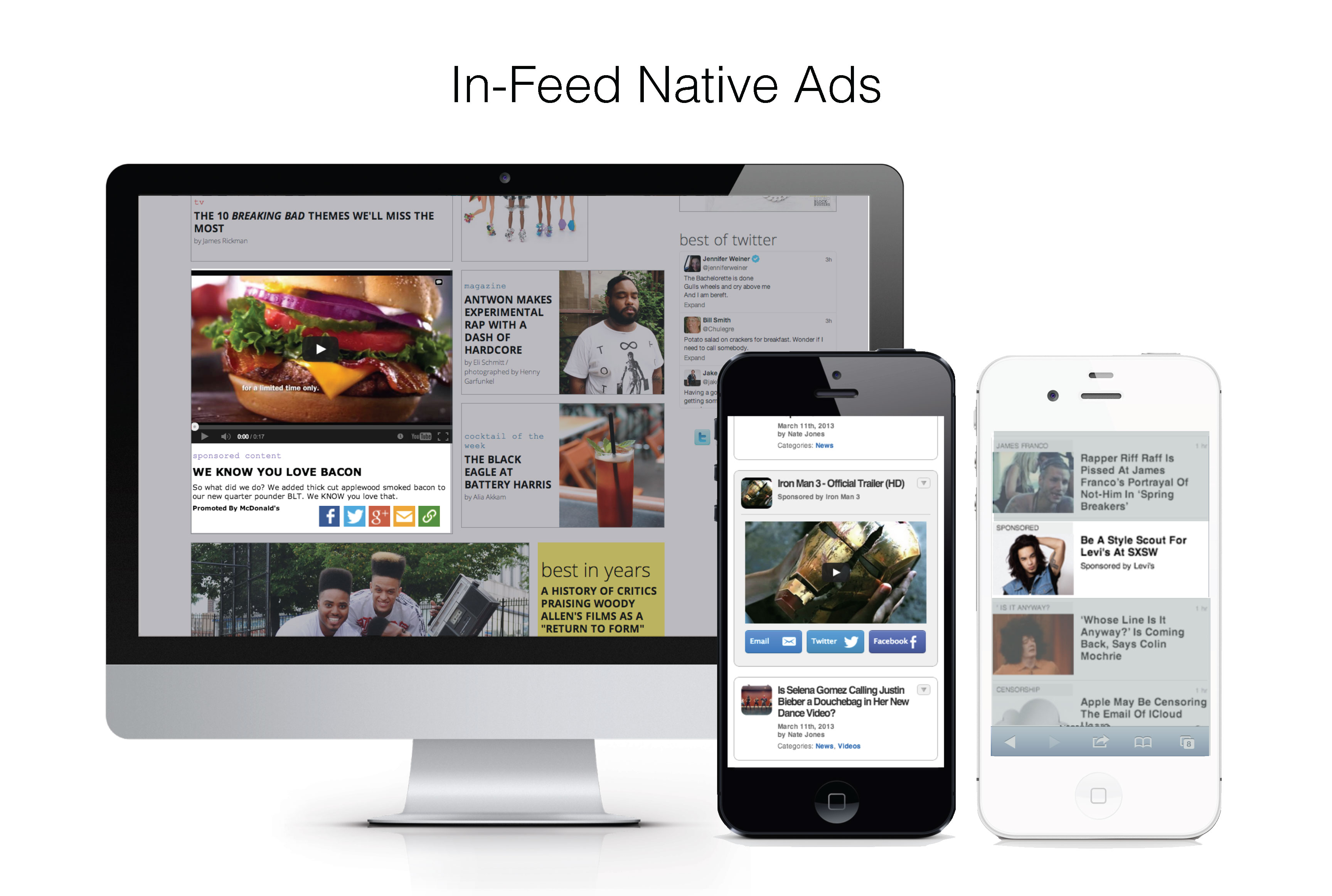
The in-feed style was originally pioneered by social platforms like Facebook and Twitter and was first brought to content publishers by Sharethrough. These units, as the name suggests, appear directly within a feed of content and contain the same atomic elements as the content around it (headlines, thumbnails and descriptions):
On the Sharethrough Exchange (STX), every placement has the same elements and only shows one ad per impression:
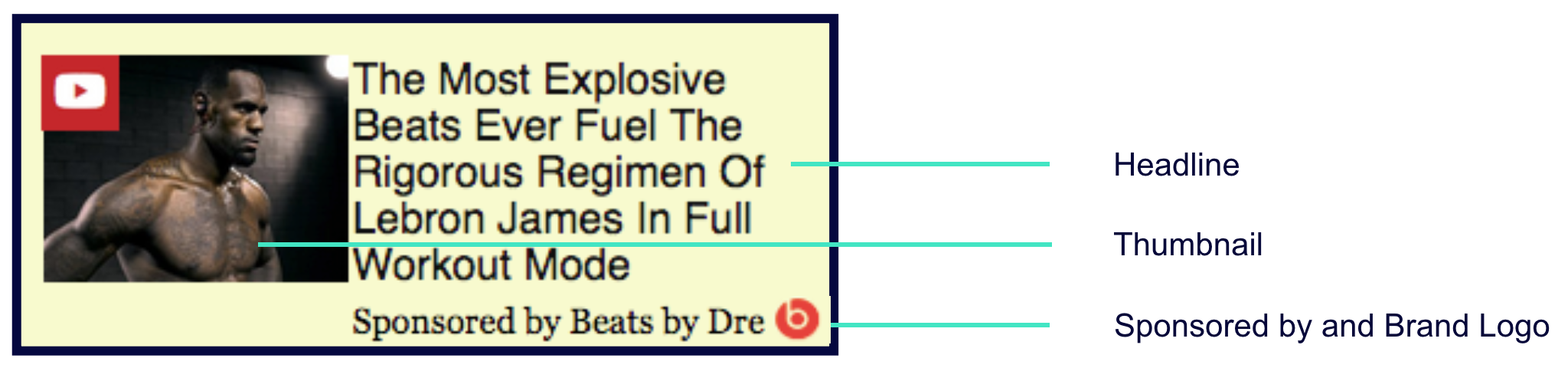
The inclusion of these elements directly in content feeds where users are discovering stories make in-feed ads perfect for marketers to influence brand perception. For more examples of in-feed placements, please see Sharethrough's Native Ad Generator.
Comments
0 comments
Please sign in to leave a comment.